Embassies & agencies
Co-fund a pilot hub, align with country plastics and youth-employment priorities.
AfriloopX is in its foundation phase — the moment when a partner can still shape the model. Tell us your mandate and we'll come back with something concrete.
Foundation phase
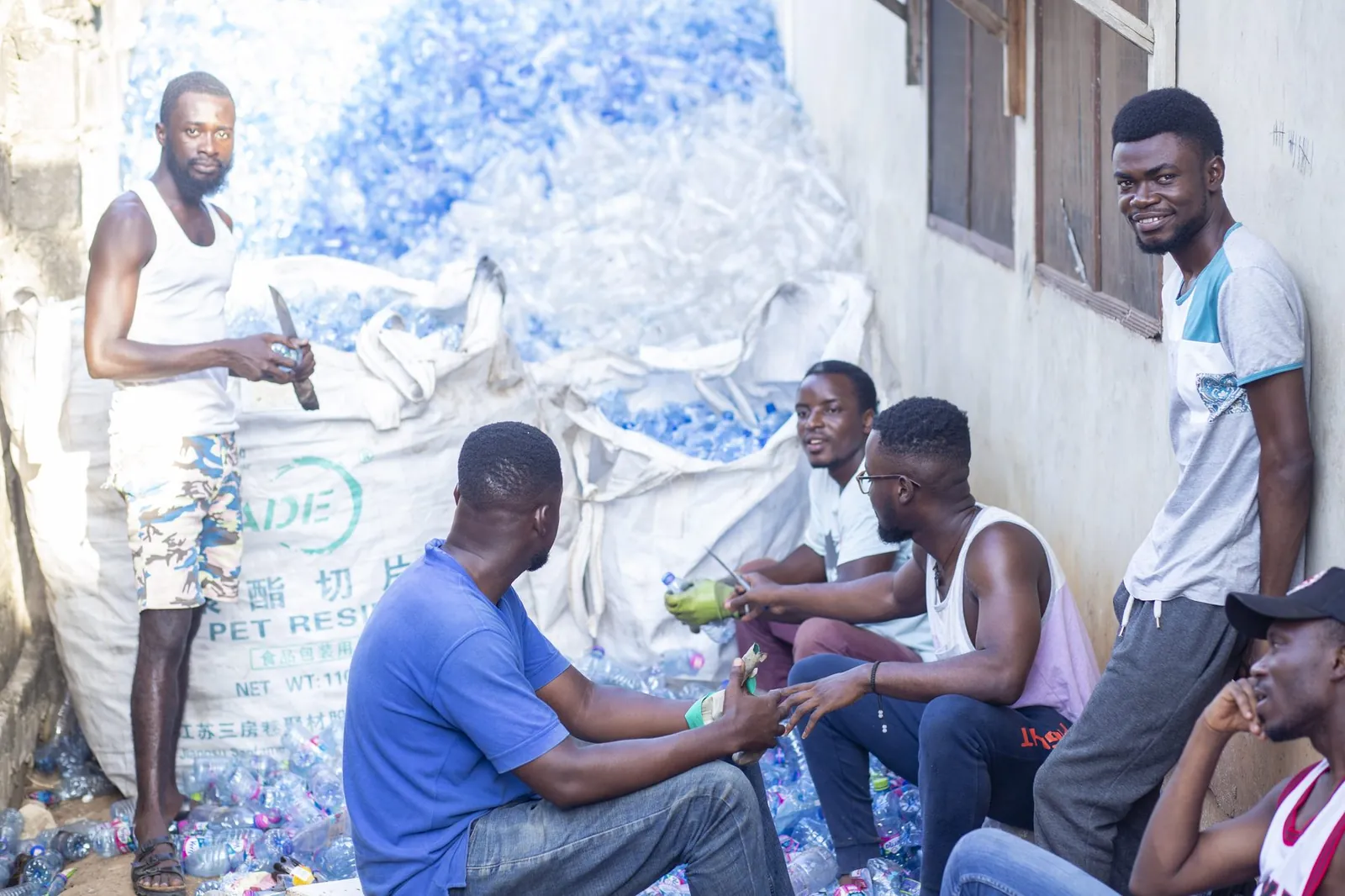
Community-led recovery, designed with the people it employs.
What happens next
01You tell us your mandate
One short form: who you are, where you work and what kind of collaboration fits.
02Pick a time instantly
Choose an intro call or site-visit planning slot on our live calendar — no email ping-pong.
03We come prepared
You receive the concept note, phase plan and budget overview before we speak.
Prefer email?
Write directly to hello@afriloopx.org — the form simply gets you a faster, better-prepared reply.
Takes about two minutes.
Partnership fit
We're deliberately selective at this stage: a small group of founding partners who can help us stand up the first hub properly rather than quickly.
Co-fund a pilot hub, align with country plastics and youth-employment priorities.
Catalytic grants or blended capital into a model built for measurable, replicable impact.
Secure future traceable PET and HDPE feedstock with verified recycled content.
Community mobilisation, permits and delivery partnerships in our pilot cities.
Impact measurement, material science and circular-economy field studies.
Engineering, logistics and ESG expertise to sharpen the operating design.
Partner categories
Not yet — we are an early-stage venture preparing to launch our first community collection hub. This is the moment to help shape the model with us as a founding partner.
We are seeking founding partners — embassies, donors, impact investors, NGOs and manufacturers. You can help fund our first hub, commit to future recycled-material offtake, or co-design programmes. Reach out via the contact form.
We are designing the operation so every kilogram can be tracked from collector to recycler, and we intend to publish transparency and impact reports from our first year of operation.
Income is designed to flow directly to local collectors — primarily women and youth — and to be reinvested into wages, training, savings groups and new community hubs.