Closing the loop, one community at a time.
Our mission is to make plastic recovery profitable, inclusive and community-owned — transforming waste into a regenerative engine for jobs and dignity across Africa.
What success looks like for our first phase
Launch our first hub
Open a single, well-run community collection point in our pilot city — built around fair pay and dignity from day one.
Create inclusive income
Generate the first paid roles for unemployed youth and women, with women in leadership from the very start.
Prove the model
Show that community-led recovery can be transparent, traceable and financially viable — ready to replicate.
Close the loop locally
Turn recovered plastic into a domestic raw material that stays on the continent instead of being exported as waste.
Four stages, one continuous loop
Each stage adds value close to the community — so plastic never leaves the economy as waste, and income never leaves as someone else's profit.
Community Collection
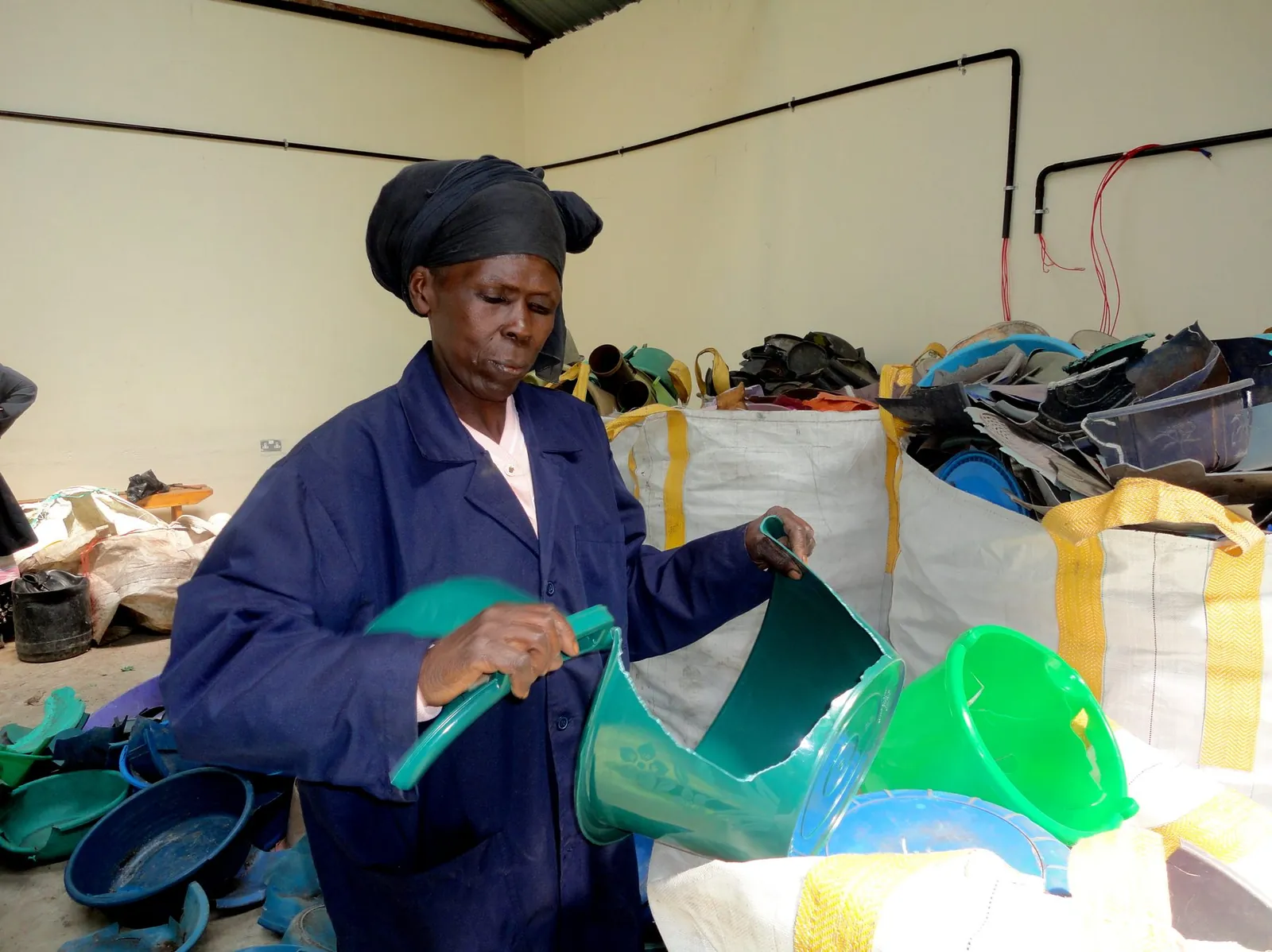
We build community-based collection networks led by local youth and women. Collectors are registered, trained and paid fairly per kilogram, turning scattered waste into a reliable, traceable supply stream.
Sorting & Aggregation
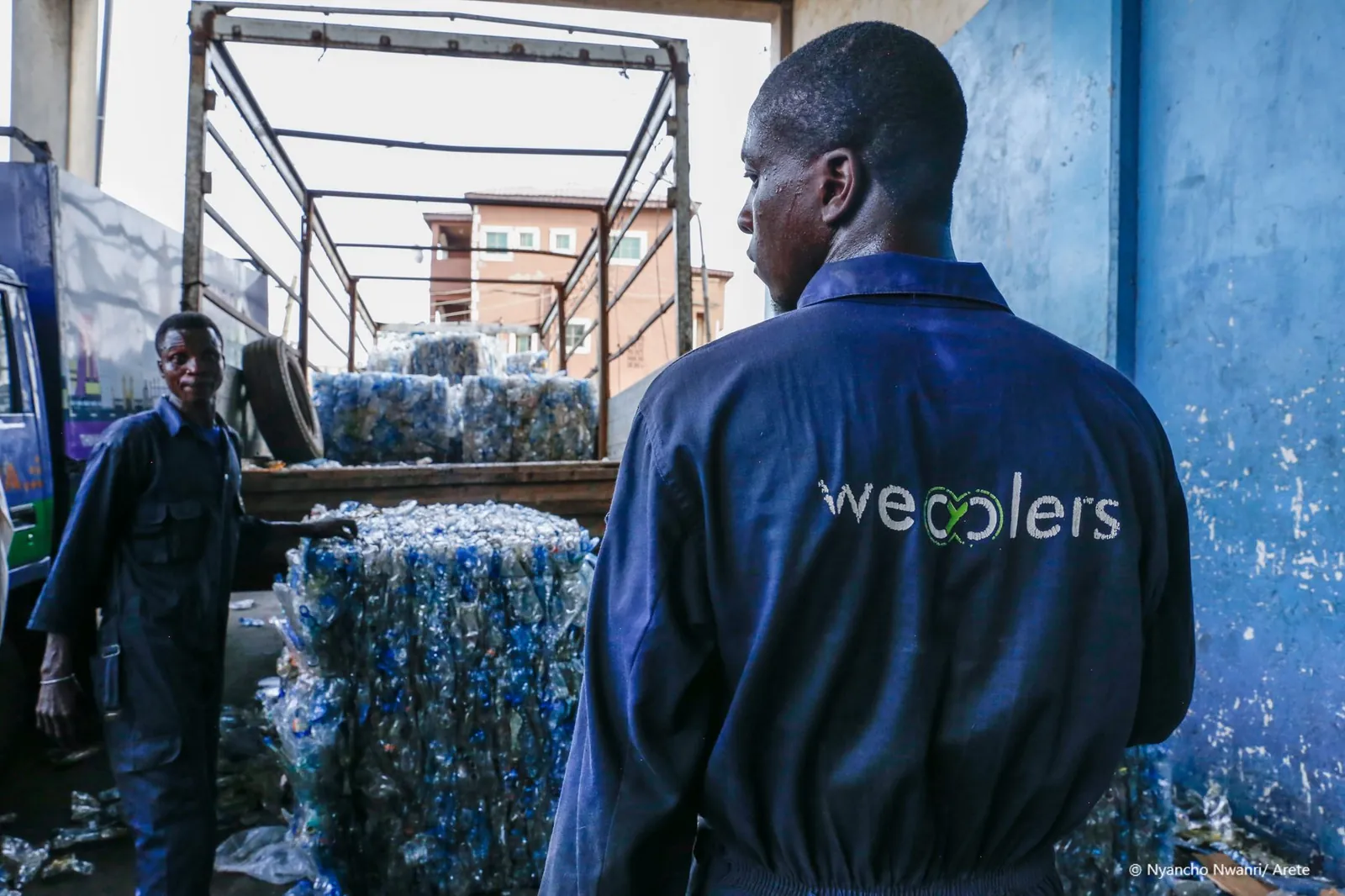
At neighbourhood aggregation hubs, plastic is sorted by type (PET, HDPE, LDPE), cleaned and baled. This adds value close to the community and preserves the quality recyclers need.
Recovery & Recycling
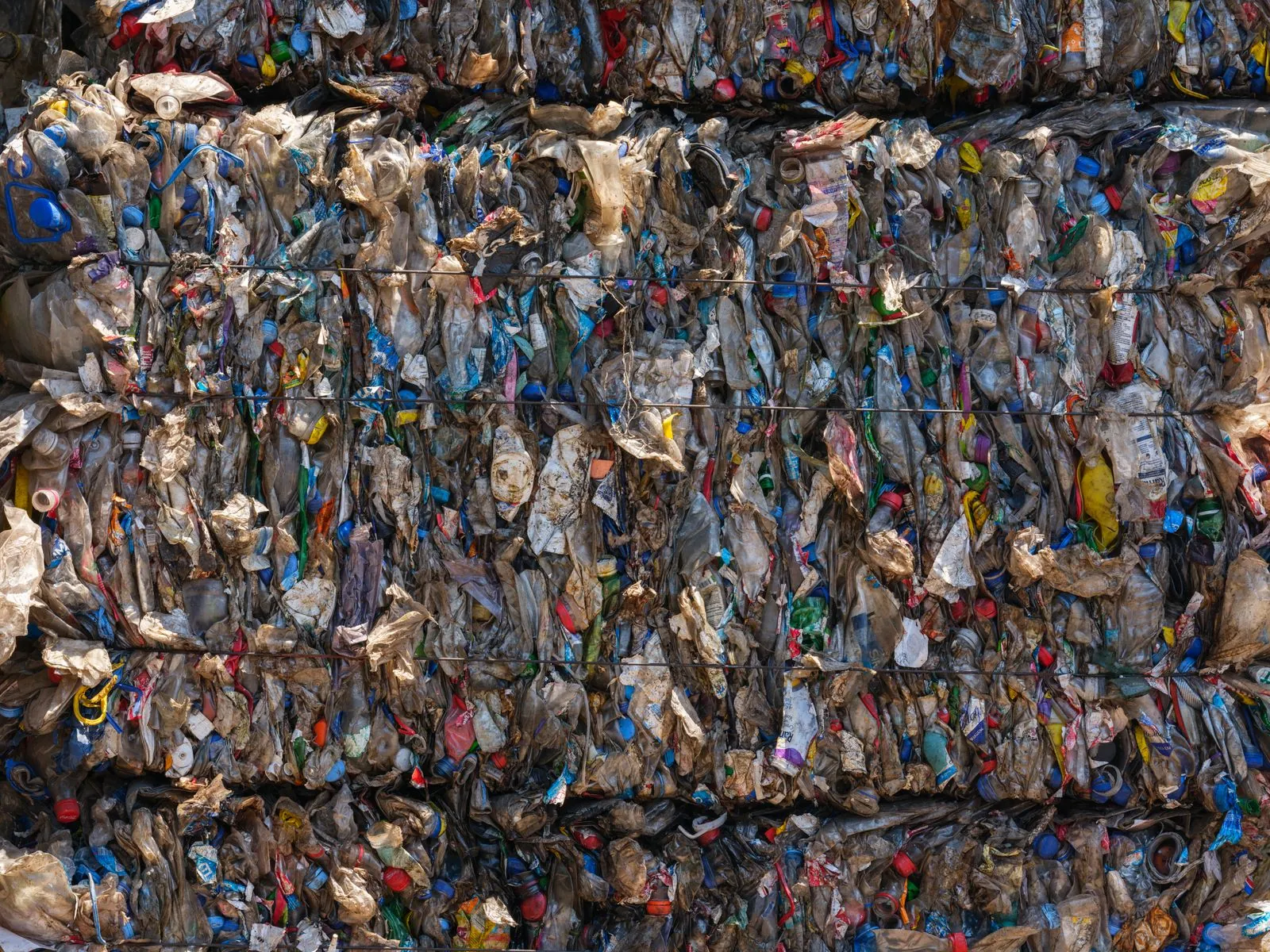
Aggregated plastic is shredded, washed and pelletised into recycled feedstock. This displaces imported virgin plastic and feeds local manufacturers, keeping the value chain on the continent.
Reinvest in People
Income from recovered material is reinvested into collector earnings, skills training, savings groups and new hubs — compounding social and environmental impact with every cycle.
The programmes that power the loop
Collector Network
Onboarding, training and fair-pay infrastructure for informal waste collectors — with a deliberate focus on women and unemployed youth.
Aggregation Hubs
Community-owned sorting and baling points that bring recycling income within walking distance of low-income neighbourhoods.
Recycled Materials
Traceable PET and HDPE flakes and pellets supplied to manufacturers seeking verified recycled content for their products.
Skills & Livelihoods
Financial literacy, enterprise training and savings groups that help collectors build assets and long-term resilience.
Waste becomes a domestic resource
Recovered plastic will be recycled into verified flakes and pellets for manufacturers — displacing imported virgin plastic and funding the next cycle of the loop.
Model a hypothetical pilot scenario
Adjust the assumptions to see what a pilot of that shape could produce. These are arithmetic projections for discussion — AfriloopX has no operational results yet.
Your assumptions
Build a scenario
Illustrative projection
If the model performed this way
- 57,600 kg
- Plastic potentially recovered
- 25
- Livelihoods potentially supported
- 2,304,000
- Bottle-equivalents diverted
- 86,400 kg
- Estimated CO₂e avoided
Illustrative scenario — not actual AfriloopX results. Figures are arithmetic outputs of the assumptions you selected, using public conversion estimates. AfriloopX has no operational recovery data.
Aligned to the Sustainable Development Goals
SDG 1
No Poverty
SDG 5
Gender Equality
SDG 8
Decent Work & Growth
SDG 12
Responsible Consumption
SDG 13
Climate Action
SDG 14
Life Below Water